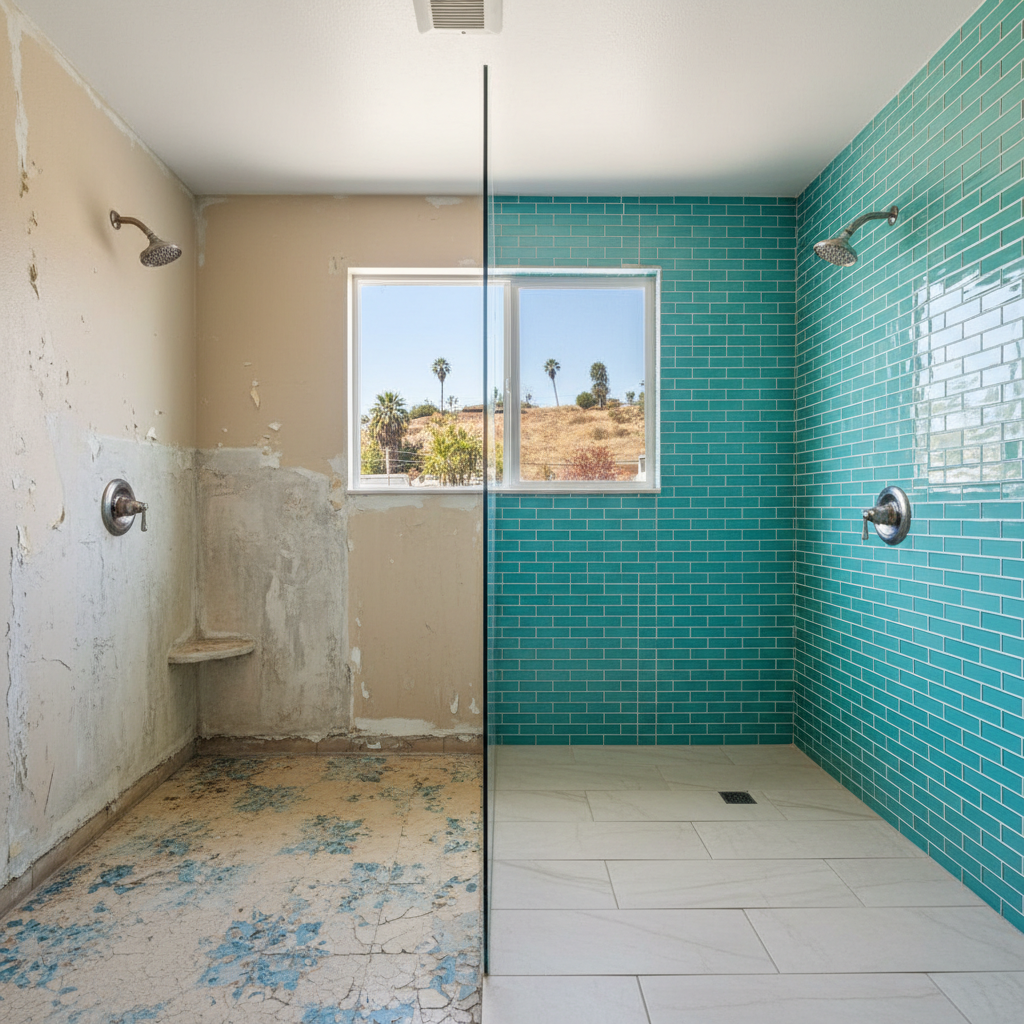
Alright, let's talk tile. Specifically, what goes under your tile. This isn't the most exciting part of a bathroom remodel, I know, but it's probably one of the most important decisions you'll make for how long your new floor or shower lasts. You've got two main players out there: good old cement board and the newer uncoupling membranes. I've installed plenty of both over the years, and each definitely has its place.
Cement Board: The Old Reliable
Cement board has been around forever, and for good reason. It's basically a sheet of cement and fiberglass mesh, and it's super stable. When you're tiling over a wood subfloor, you need something that won't move, expand, or contract much, and cement board fits the bill perfectly. It gives you a really solid, rigid surface for your thinset and tile.
- Cost: Generally, the cement board itself is a bit cheaper per square foot than an uncoupling membrane. The installation can be a little more labor-intensive, though, because it's heavy and you've got to screw it down every 8 inches or so. Plus, you often need to tape and mud the seams, just like drywall, to create a smooth surface.
- Durability: This stuff is tough. It doesn't rot, mold, or get eaten by bugs. Once it's down, it's not going anywhere. It provides a really strong foundation that helps prevent your tiles from cracking due to minor deflection in the subfloor.
- Maintenance: Once the tile is on top, you're not really maintaining the cement board itself. It's just doing its job underneath.
- Appearance: Doesn't affect the final look of your tile, obviously. It's all about the foundation.
One thing I've noticed around Lawndale, especially in some of those older homes near Marine Avenue, is that subfloors can be a bit creaky or uneven. Cement board can help stiffen things up, but you still need a solid subfloor underneath. If your subfloor has too much flex, even cement board won't save your tile from cracking eventually. What a bummer that would be, right?
Uncoupling Membranes: The Modern Solution
Now, uncoupling membranes, like Schluter Ditra, are a different beast. These are usually thin, waffle-patterned mats made of polyethylene. Their main job is to