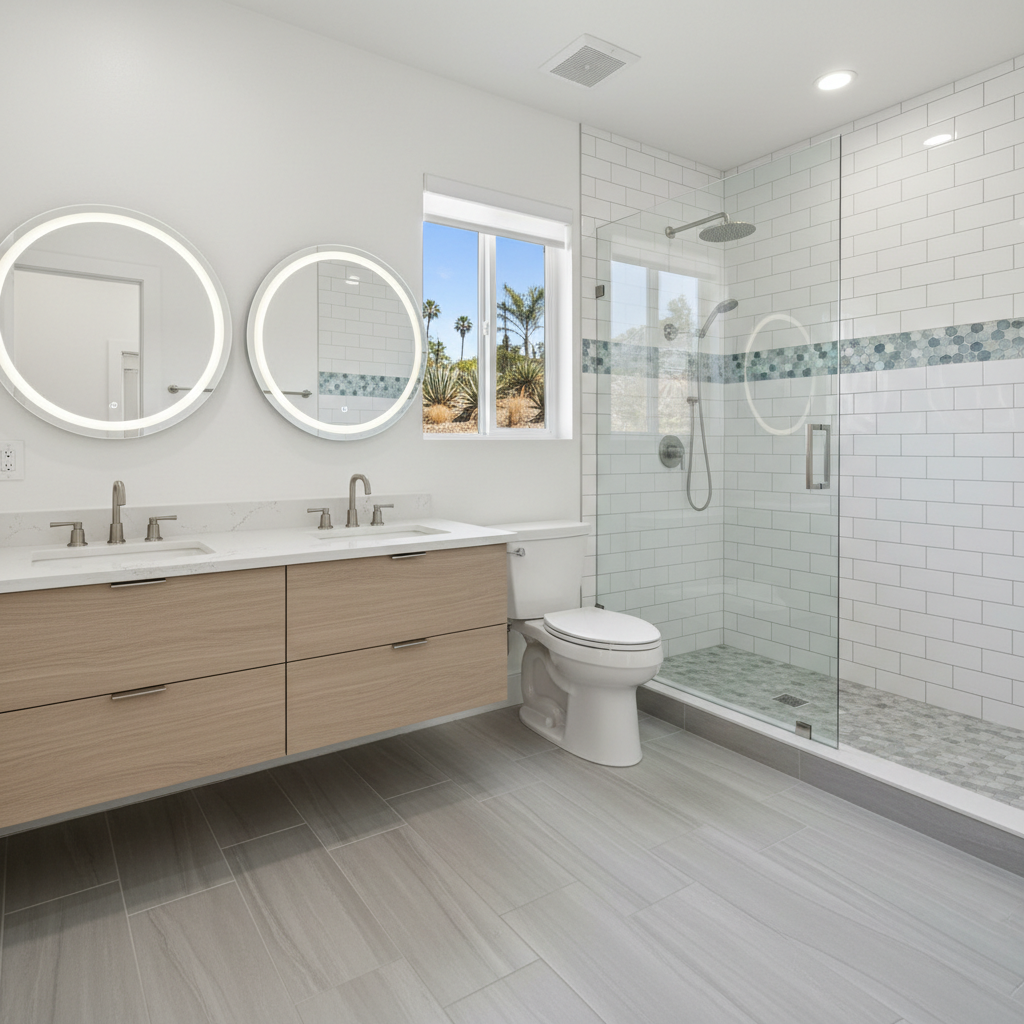
Alright, let's talk about flooring costs. Everyone wants to know, 'How much is this going to set me back?' And I get it. You're trying to budget, trying to figure out if that dream bathroom floor or new living room tile is even in the cards. As someone who's been doing this for years, right here in Lawndale, I can tell you it's not always a simple answer, but I can give you some real numbers and insights.
What Makes Flooring Costs Go Up or Down?
A lot of things factor into the final price tag for a new tile or flooring installation. It's not just the material itself. You've got labor, prep work, the type of material, and even the layout of your home.
- Material Choice: This is probably the biggest one. Ceramic or porcelain tile is generally more affordable than natural stone like marble or travertine. Luxury Vinyl Plank (LVP) is super popular now and usually falls somewhere in the middle, often cheaper than high-end tile but more than basic carpet. Hardwood varies wildly depending on the species and finish.
- Square Footage: Pretty straightforward, right? The more area you need to cover, the more material and labor it'll take.
- Subfloor Condition: This is a big one people often forget. If your existing subfloor isn't flat, solid, and clean, we'll need to do prep work. That could mean leveling compounds, new plywood, or even addressing moisture issues. This adds time and materials, and it's non-negotiable if you want your new floor to last.
- Demolition and Disposal: Pulling up old carpet, linoleum, or especially old tile is work. And then we have to haul it away. That's a cost.
- Layout Complexity: A simple, rectangular room is easier and faster to tile than a bathroom with a bunch of corners, a toilet flange, and a shower pan. Intricate patterns, like a herringbone or diagonal lay, also take more time and skill, meaning more labor cost.
- Type of Tile/Flooring: Large format tiles (think 24x48 inches) can be quicker to lay in a big open space, but they require a perfectly flat subfloor and can be trickier to handle. Smaller mosaic tiles, while covering less area per piece, take a lot more individual placement.
- Grout Type: Standard sanded grout is common. Epoxy grout, which is fantastic for wet areas like showers because it's stain-proof and highly durable, costs more for the material and takes more specialized labor to install correctly.
Typical Cost Ranges in Lawndale, CA
Okay, let's get down to some actual numbers. These are general ranges for installation, including materials and labor, for a standard project in a Lawndale home – maybe one of those classic ranch-style houses near Redondo Beach Blvd where the original linoleum is finally giving up the ghost. Keep in mind, these are averages, and your specific project could be higher or lower.
- Ceramic/Porcelain Tile: You're usually looking at $8 - $16 per square foot. This includes a decent quality tile, thin-set, grout, and professional installation. If you go for high-end designer tiles or very complex patterns, it can easily go up to $20-$30+ per square foot.
- Luxury Vinyl Plank (LVP): This is a fantastic option for durability and looks. Expect to pay around $6 - $12 per square foot installed. The material cost varies a lot here, from basic click-lock planks to premium glue-down options.
- Hardwood Flooring: For engineered hardwood, you're typically in the $10 - $20 per square foot range. Solid hardwood can be $12 - $25+ per square foot, depending on the wood species, plank width, and finish. This often includes sanding and finishing if it's unfinished wood.
- Natural Stone (Marble, Travertine, Slate): This is where costs jump. Expect $15 - $40+ per square foot. The material itself is expensive, and it's harder to work with, requiring specialized tools and techniques.
Remember, these ranges don't usually include extensive subfloor repair beyond minor leveling or the removal of existing tile. If we're ripping out old, glued-down ceramic, that's an extra line item.
What Should Be Included in Your Quote?
When you get a quote from Lawndale Bathroom Construction, or any reputable contractor, it should be pretty clear what you're paying for. Here's what you want to see:
- Material Costs: Itemized for the tile/flooring itself, thin-set/adhesive, grout, caulk, transition pieces, and any underlayment or moisture barrier.
- Labor Costs: This covers the actual installation of the flooring.
- Prep Work: Clearly state what subfloor preparation is included (e.g., minor leveling, sweeping, patching) and what isn't (e.g., extensive subfloor replacement).
- Demolition & Disposal: If we're removing old flooring, this should be listed.
- Permits: For flooring, you usually don't need a permit unless it's part of a larger structural change, but if one is required, it should be noted.
- Warranty: What kind of warranty do they offer on their labor?
A good quote won't just be a single number. It'll break things down so you understand where your money is going.
How to Avoid Overpaying for Your New Floors
- Get Multiple Bids: This is a no-brainer. Talk to at least three reputable contractors. Don't just go for the cheapest. Compare what's included in each bid.
- Be Specific About Materials: Know what you want. If you just say